Sách keo gáy, bìa mềm
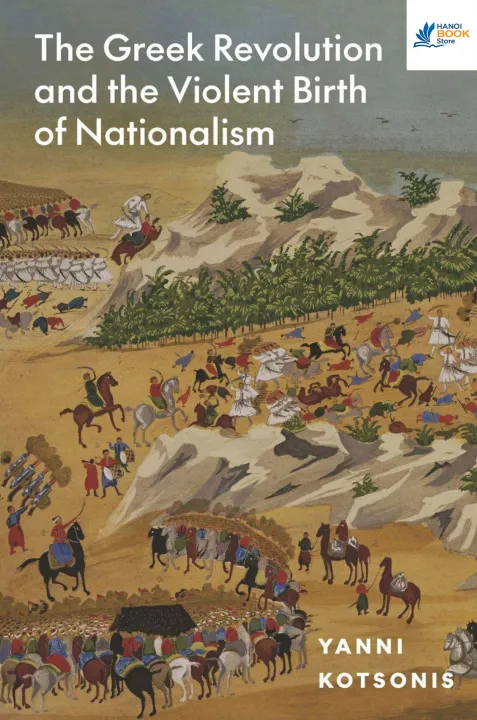
"At the beginning of the nineteenth century, Greece
was not a country-it was only a vague idea. The territories we now call
Greece were part of the Ottoman Empire, though some of its islands were
ruled at various points by the Venetians, the French, the Russians, and
the British. The population was a mix of religious and ethnic groups
including Muslims, Orthodox Christians, Catholics, and Jews, who spoke
Albanian, Turkish, Vlach dialects, and numerous other varieties of
Greek. But by 1830, Greece was a united, independent, and Orthodox
Christian country that had made a global impact in the age of empires.
In The Greek Revolution: A New History, Yanni Kotsonis tells the story
of the 1821 revolution and war for Greek independence, arguing that
Greece's evolution was far from inevitable. The author paints a vivid
picture of how a religiously, ethnically, and linguistically mixed
milieu turned violent and chaotic, and how the Enlightenment and the
imperial machinations of Greece's neighbors and other European power
created a movement within Greece to join "Christian Europe." Over the
course of the revolution, all Orthodox Christians became Greek, and all
Muslims became Turks (the many languages and dialects used by both
populations notwithstanding). The author brings the revolution to life
through the colorful stories of figures now regarded as heroes of the
revolution, from the mercenary and pirate "Little Theodore" Kolokotronis
to the former Venetian aristocrat Giovanni Cap d'Istria. Though Greece
was only a small province of the Ottoman Empire, its emergence after the
Greek Revolution of 1821 led to the creation of Greek identity, gave
rise to the idea of a Christian nation, and set the stage for the age of
nationalism that was to come"--
Categories:History - European History
Content Type:Books
Year:2025
Language:english
Pages:393