Sách keo gáy, bìa mềm
Assembly is a low-level programming language
that's one step above a computer's native machine language. Although
assembly language is commonly used for writing device drivers,
emulators, and video games, many programmers find its somewhat
unfriendly syntax intimidating to learn and use.
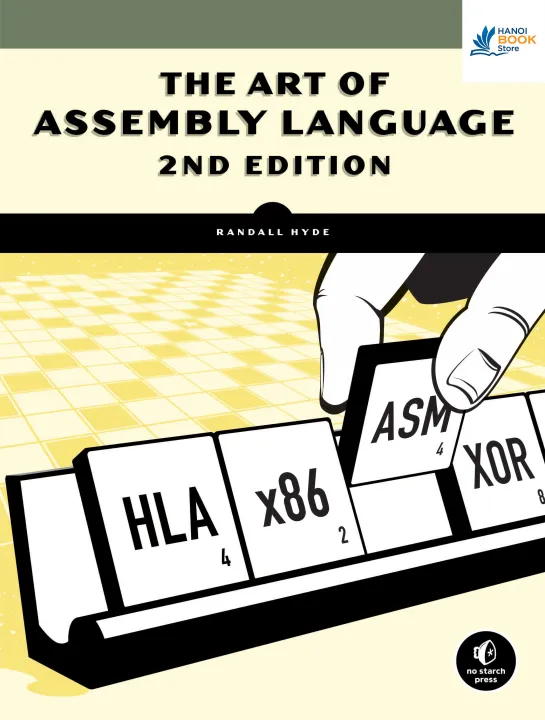
Since 1996, Randall Hyde's The Art of Assembly Language
has provided a comprehensive, plain-English, and patient introduction
to assembly for non-assembly programmers. Hyde's primary teaching tool,
High Level Assembler (or HLA), incorporates many of the features found
in high-level languages (like C, C++, and Java) to help you quickly
grasp basic assembly concepts. HLA lets you write true low-level code
while enjoying the benefits of high-level language programming.
As you read The Art of Assembly Language,
you'll learn the low-level theory fundamental to computer science and
turn that understanding into real, functional code. You'll learn how to:
Edit, compile, and run an HLA program
Declare and use constants, scalar variables, pointers, arrays, structures, unions, and namespaces
Translate arithmetic expressions (integer and floating point)
Convert high-level control structures
This much anticipated second edition of The Art of Assembly Language
has been updated to reflect recent changes to HLA and to support Linux,
Mac OS X, and FreeBSD. Whether you're new to programming or you have
experience with high-level languages, The Art of Assembly Language, 2nd Edition is your essential guide to learning this complex, low-level language.
Categories:Computers - Programming
Year:2010
Edition:2
Language:english
Pages:764