Sách keo gáy, bìa mềm
As malware increasingly obfuscates itself and
applies anti-analysis techniques to thwart our analysis, we need more
sophisticated methods that allow us to raise that dark curtain designed
to keep us out—binary analysis can help. The goal of all binary analysis
is to determine (and possibly modify) the true properties of binary
programs to understand what they really do, rather than what we think
they should do. While reverse engineering and disassembly are critical
first steps in many forms of binary analysis, there is much more to be
learned.
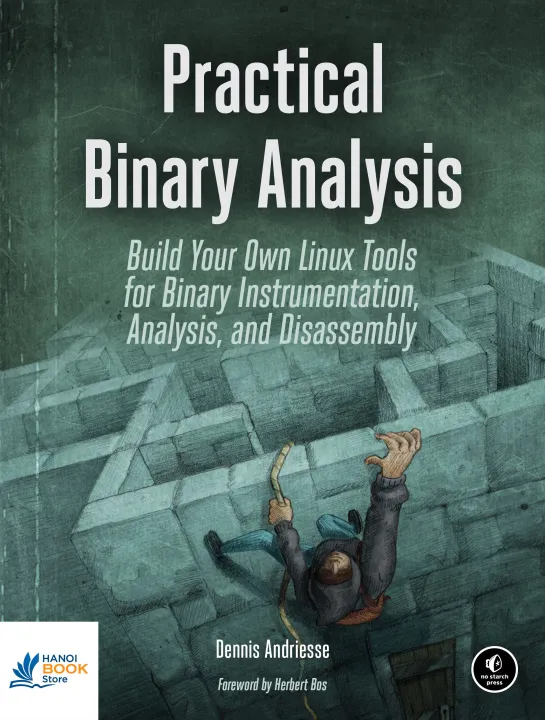
This hands-on guide teaches you how to tackle the
fascinating but challenging topics of binary analysis and
instrumentation and helps you become proficient in an area typically
only mastered by a small group of expert hackers. It will take you from
basic concepts to state-of-the-art methods as you dig into topics like
code injection, disassembly, dynamic taint analysis, and binary
instrumentation. Written for security engineers, hackers, and those with
a basic working knowledge of C/C++ and x86-64, Practical Binary
Analysis will teach you in-depth how binary programs work and help you
acquire the tools and techniques needed to gain more control and insight
into binary programs.
Once you’ve completed an introduction to basic
binary formats, you’ll learn how to analyze binaries using techniques
like the GNU/Linux binary analysis toolchain, disassembly, and code
injection. You’ll then go on to implement profiling tools with Pin and
learn how to build your own dynamic taint analysis tools with libdft and
symbolic execution tools using Triton. You’ll learn how to:
Parse ELF and PE binaries and build a binary loader with libbfd
Use
data-flow analysis techniques like program tracing, slicing, and
reaching definitions analysis to reason about runtime flow of your
programs
Modify ELF binaries with techniques like parasitic code injection and hex editing
Build custom disassembly tools with Capstone
Use binary instrumentation to circumvent anti-analysis tricks commonly used by malware
Apply taint analysis to detect control hijacking and data leak attacks
Use symbolic execution to build automatic exploitation tools
With
exercises at the end of each chapter to help solidify your skills,
you’ll go from understanding basic assembly to performing some of the
most sophisticated binary analysis and instrumentation. Practical Binary
Analysis gives you what you need to work effectively with binary
programs and transform your knowledge from basic understanding to
expert-level proficiency.
Categories:Computers - Operating Systems
Year:2018
Language:english
Pages:460