Sách keo gáy, bìa mềm
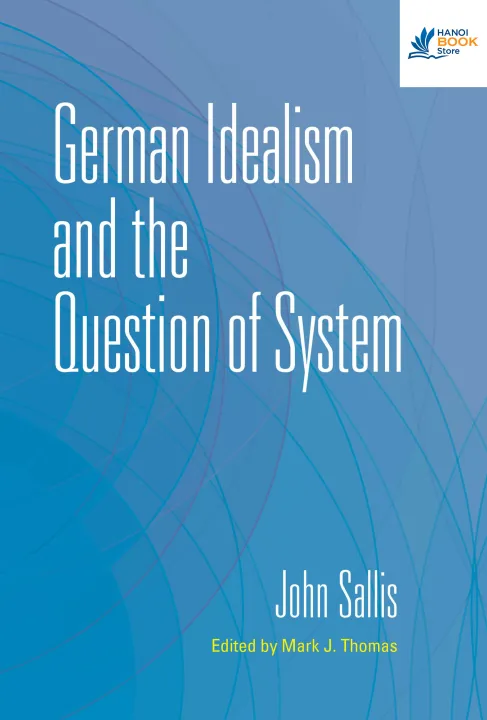
This volume in the Collected Writings of John Sallis
presents his lecture course on German Idealism, tracing its development
from the reception of Kant through the works of Fichte and Schelling.
With insightful interpretations of key texts, John Sallis demonstrates
the enduring power of post-Kantian thought—especially with respect to
freedom, the relation of subject to object, and the role of the
imagination. He shows that what underlies the development of German
Idealism is a concern with the question of system and the nature of
philosophy itself. The book begins with a treatment of Kant's philosophy
and its new beginning. It then discusses the initial reception of
Kant's philosophy, showing how criticisms of Kant set the stage for the
subsequent development of German Idealism. The central chapters focus on
Fichte, first introducing his central philosophical project (the
Wissenschaftslehre) and then carefully analyzing its implementation in
the 1794 Grundlage. The final chapters treat Schelling's early and
middle philosophy, including the 1800 System of Transcendental Idealism
and his famous 1809 treatise on freedom. Beyond its insights into the
thought of German Idealism, the book is distinctive for the clarity of
Sallis's exposition, his attention to the implications for philosophy
today, and the sense of wonder he evokes in his readers. Because of
these features, the book will be of interest to general readers as well
as specialists in German philosophy.
Categories:Society, Politics & Philosophy - Philosophical Positions & Movements
Content Type:Books
Year:2024
Edition:1
Language:english
Pages:184