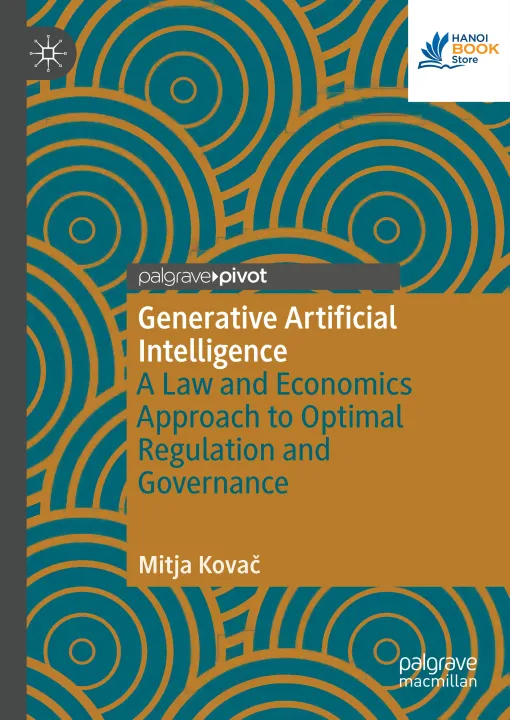
Sách keo gáy, bìa mềm
This book takes a comparative law and economics
approach to explore the role of public and private actors in regulating
generative artificial intelligence. The book provides an introduction
and context for the creation of new generative AI technologies, now
understood to be the chief goal of the leading AI companies. As
autonomous ‘super-intelligences’, these technologies are still an
unknown entity which nevertheless have profound implications for liberal
democracy, consumer choice mechanisms, mutual trust, and political
legitimacy. This book explores the deep challenges posed for lawmakers
and how we can achieve an optimal form of regulation and governance of
such unreliable technologies. Chapters investigate possible hybrid modes
of regulation, such as a co-regulatory approach between private AI
companies and public actors in addressing the issue of misinformation
spread. It also explores mixed types of regulation toward research on
new forms of AI, arguing that different levels of systemic risk posed by
different technologies must be accounted for. Different contemporary
and historical contexts for the regulation of unprecedented technical
innovation are also considered, and new suggestions for policy are
presented. This book is a timely resource which will be of interest to
researchers and practitioners in economic governance, law and
regulation, artificial intelligence, and comparative law.
Content Type:Books
Year:2025
Edition:3
Language:english
Pages:234