Sách keo gáy, bìa mềm
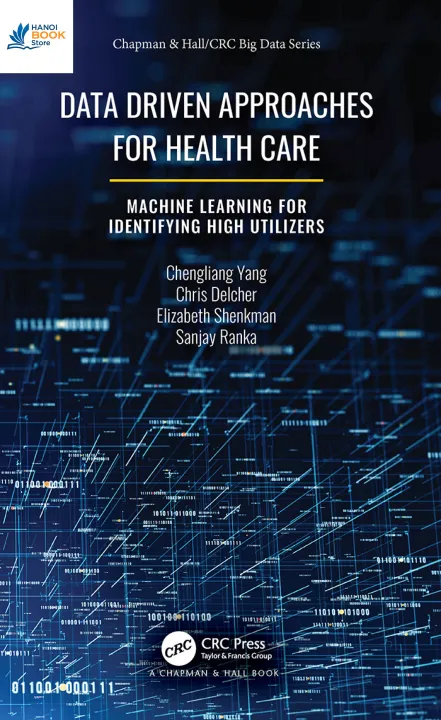
Health care utilization routinely generates vast
amounts of data from sources ranging from electronic medical records,
insurance claims, vital signs, and patient-reported outcomes. Predicting
health outcomes using data modeling approaches is an emerging field
that can reveal important insights into disproportionate spending
patterns. This book presents data driven methods, especially machine
learning, for understanding and approaching the high utilizers problem,
using the example of a large public insurance program. It describes
important goals for data driven approaches from different aspects of the
high utilizer problem, and identifies challenges uniquely posed by this
problem.
Key Features:
Introduces basic elements of health care
data, especially for administrative claims data, including disease code,
procedure codes, and drug codes Provides tailored supervised and
unsupervised machine learning approaches for understanding and
predicting the high utilizers Presents descriptive data driven methods
for the high utilizer population Identifies a best-fitting linear and
tree-based regression model to account for patients' acute and chronic
condition loads and demographic characteristics
Categories:Computers - Artificial Intelligence (AI)
Year:2020
Language:english