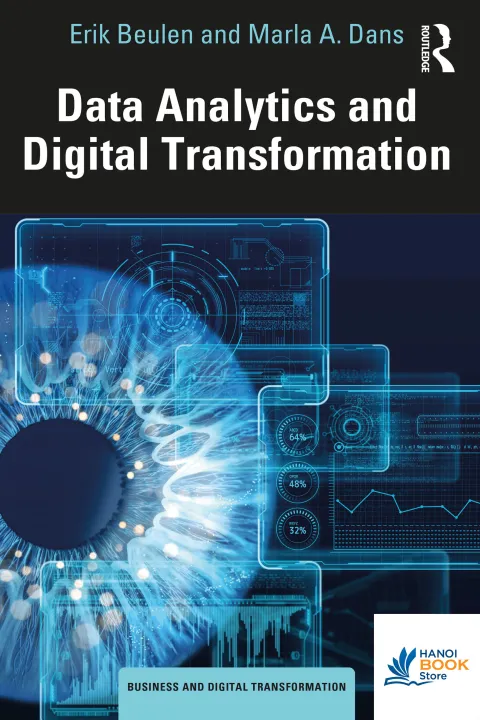
Sách Data Analytics and Digital Transformation (sách keo gáy, bìa mềm)
Thể loại:Computers - Algorithms and Data Structures
Năm:2023
Ngôn ngữ:english
Trang:257
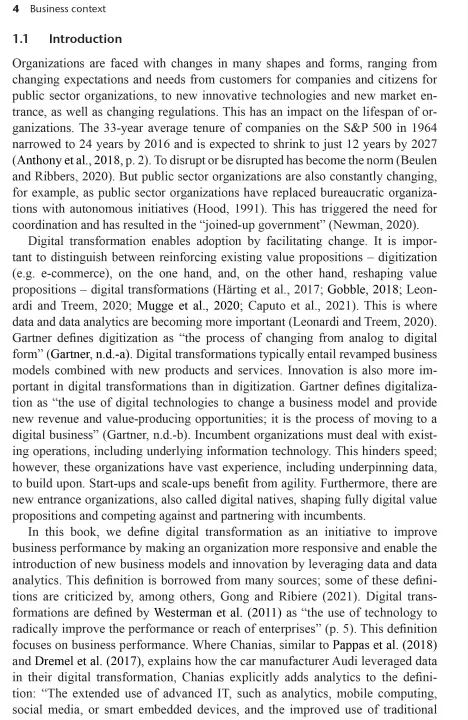
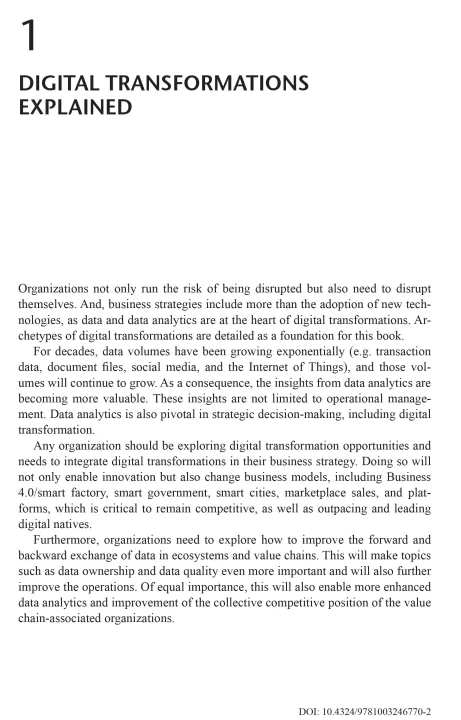
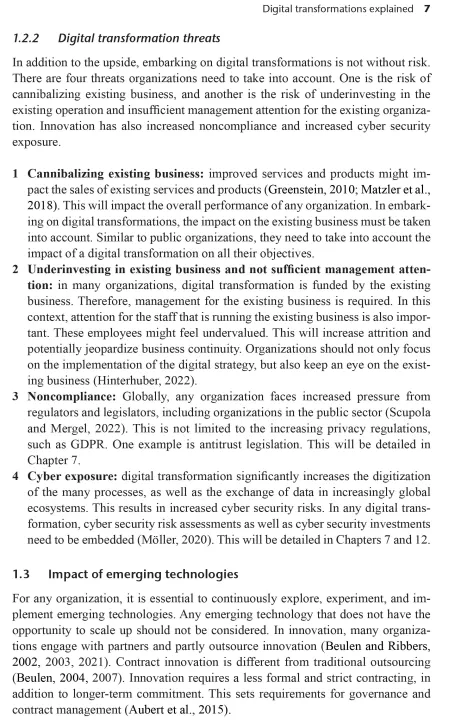
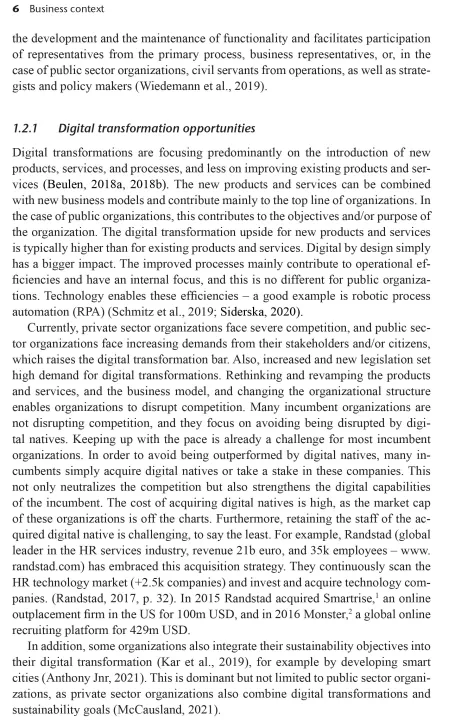
Understanding the significance of data analytics is paramount for
digital transformation but in many organizations they are separate units
without fully aligned goals. As organizations are applying digital
transformations to be adaptive and agile in a competitive environment,
data analytics can play a critical role in their success. This book
explores the crossroads between them and how to leverage their
connection for improved business outcomes. The need to collaborate and
share data is becoming an integral part of digital transformation. This
not only creates new opportunities but also requires well-considered and
continuously assessed decision-making as competitiveness is at stake.
This book details approaches, concepts, and frameworks, as well as
actionable insights and good practices, including combined data
management and agile concepts. Critical issues are discussed such as
data quality and data governance, as well as compliance, privacy, and
ethics. It also offers insights into how both private and public
organizations can innovate and keep up with growing data volumes and
increasing technological developments in the short, mid, and long term.
This book will be of direct appeal to global researchers and students
across a range of business disciplines, including technology and
innovation management, organizational studies, and strategic management.
It is also relevant for policy makers, regulators, and executives of
private and public organizations looking to implement successful
transformation policies.
Volumes of data are growing at an
unprecedented speed, driven by the Internet of Things (IoT) and
unstructured data (e.g. social media content), as well as additional
data generated by transforming into digital organizations. This feeds
back into data analytics as well as Data Science, requiring even more
mature data management and governance to achieve enriched insights. In
addition, the need to collaborate and share data is becoming an integral
part of digital transformations. This not only creates new
opportunities but also requires well-considered and continuously
assessed decision-making as competitiveness is at stake. This book
details approaches, concepts, and frameworks, as well as actionable
insights and good practices, including combined data management and
agile concepts. In addition, a deep dive into privacy and ethics will be
included.
Intuition and experience need to be powered by data
analytics. Organizations need to integrate data-driven decision-making
into their DNA. Data-driven decision-making is not limited to
incremental (investment) decisions, it also extends to decision-making
in day-to-day operations and processes. Improved incremental
decision-making typically supports the more strategic decision-making by
senior management and higher. Predictive and prescriptive Artificial
Intelligence (AI) models predict future outcomes, enabling the decision
maker to choose the best future course of action.
Examples of
data-driven algorithms are decision trees, support vector machines
(SVM), K-means, k nearest neighbor (kNN), Adaboost, and Deep Learning
(DL) algorithms. These will further drive innovation. This outlook is
particularly relevant for decision-making in day-to-day processes;
automatic pricing adjustments based on inventory, demand, and competitor
pricing in retail would be good examples for data-driven analytics. In
this book, data-driven analytics is embedded in data-driven
decision-making.