Sách keo gáy, bìa mềm
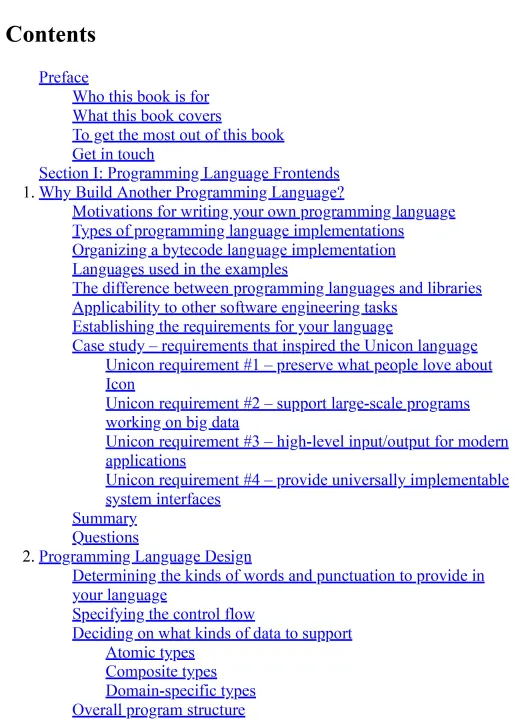
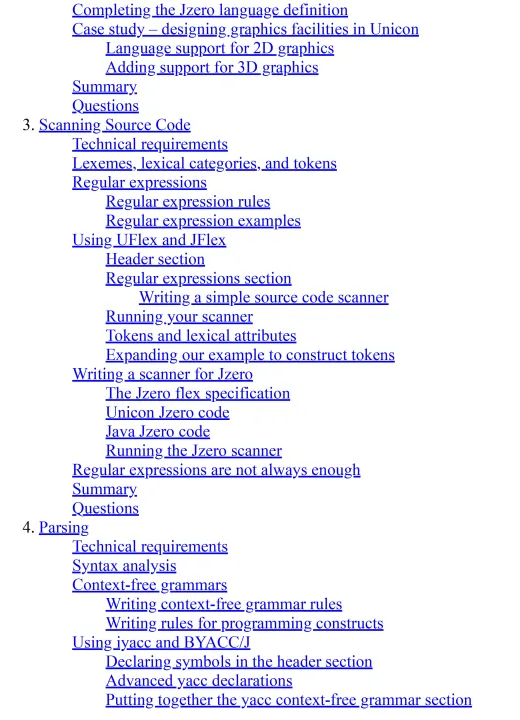
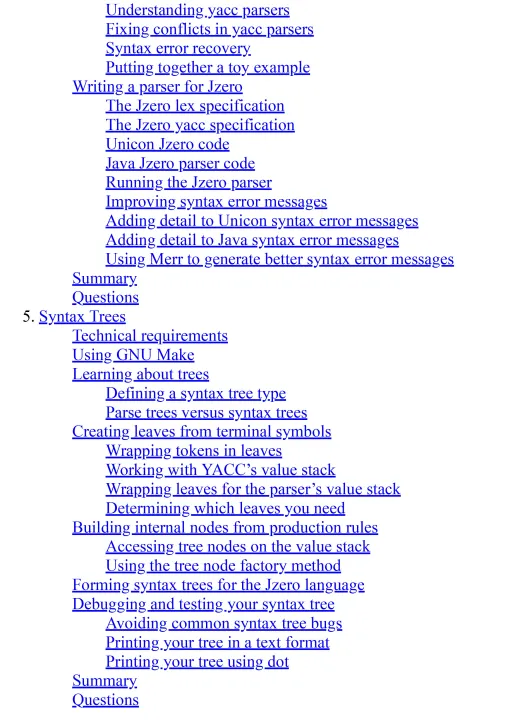
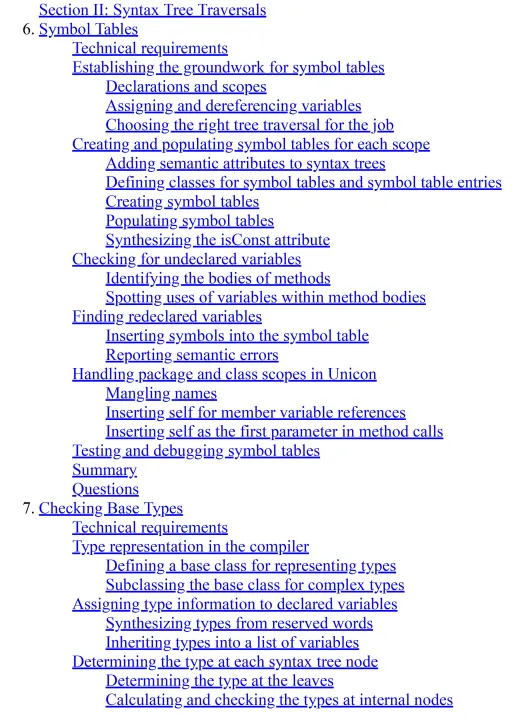
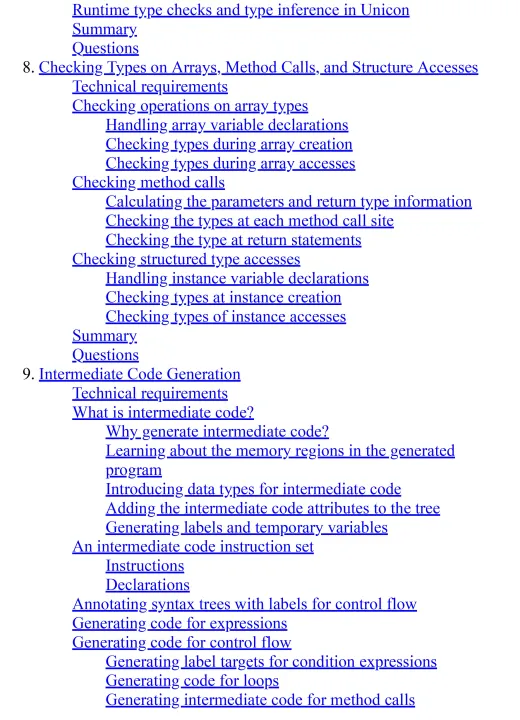
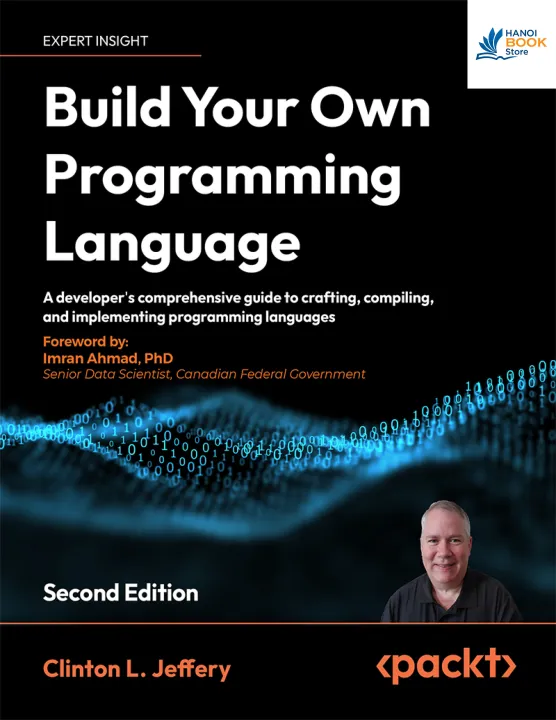
Embark on a journey through essential components of
language design, compiler construction, preprocessors, transpilers, and
runtime systems in this second edition, authored by the creator of the
Unicon programming language.Purchase of the print or Kindle book
includes a free PDF eBook Key Features Solve pain points in your
application domain by building a custom programming language Learn how
to create parsers, code generators, semantic analyzers, and interpreters
Target bytecode, native code, and preprocess or transpile code into
another high-level language Book Description There are many reasons to
build a programming language: out of necessity, as a learning exercise,
or just for fun. Whatever your reasons, this book gives you the tools to
succeed. You'll build the frontend of a compiler for your language with
a lexical analyzer and parser, including the handling of parse errors.
Then you'll explore a series of syntax tree traversals before looking at
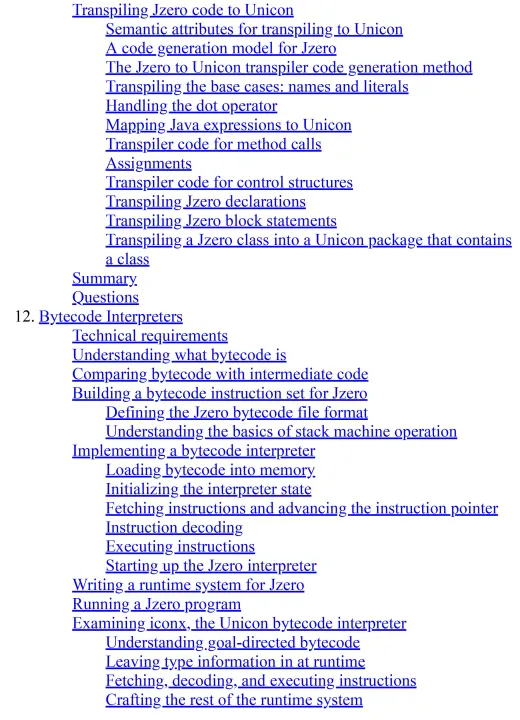
code generation for a bytecode virtual machine or native code. In this
edition, a new chapter has been added to assist you in comprehending the
nuances and distinctions between preprocessors and transpilers. Code
examples have been modernized, expanded, and rigorously tested, and all
content has undergone thorough refreshing. You'll learn to implement
code generation techniques using practical examples, including the
Unicon Preprocessor and transpiling Jzero code to Unicon. You'll move to
domain-specific language features and learn to create them as built-in
operators and functions. You'll also cover garbage collection.Dr.
Jeffery's experiences building the Unicon language are used to add
context to the concepts, and relevant examples are provided in both
Unicon and Java so that you can follow along in your language of choice.
By the end of this book, you'll be able to build and deploy your own
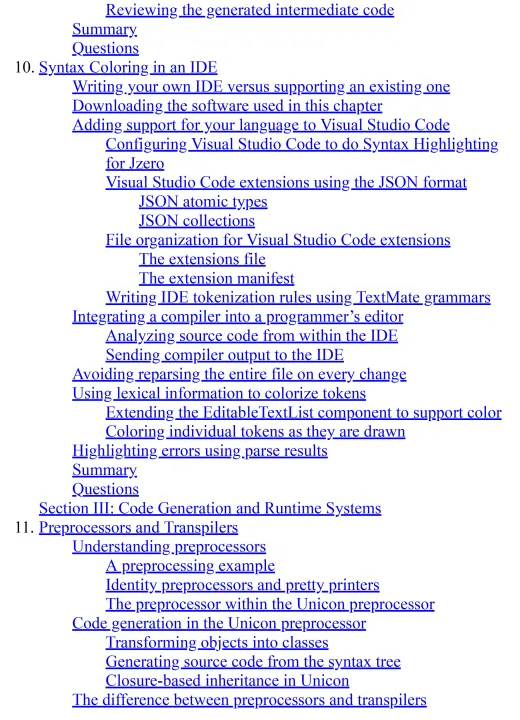
domain-specific language. What you will learn Analyze requirements for
your language and design syntax and semantics. Write grammar rules for
common expressions and control structures. Build a scanner to read
source code and generate a parser to check syntax. Implement
syntax-coloring for your code in IDEs like VS Code. Write tree
traversals and insert information into the syntax tree. Implement a
bytecode interpreter and run bytecode from your compiler. Write native
code and run it after assembling and linking using system tools.
Preprocess and transpile code into another high-level language Who this
book is for This book is for software developers interested in the idea
of inventing their own language or developing a domain-specific
language. Computer science students taking compiler design or
construction courses will also find this book highly useful as a
practical guide to language implementation to supplement more
theoretical textbooks. Intermediate or better proficiency in Java or C++
programming languages (or another high-level programming language) is
assumed.
Thể loại:Computers - Programming
Năm:2024
In lần thứ:2nd
Nhà xuát bản:Packt Publishing
Ngôn ngữ:english
Trang:557