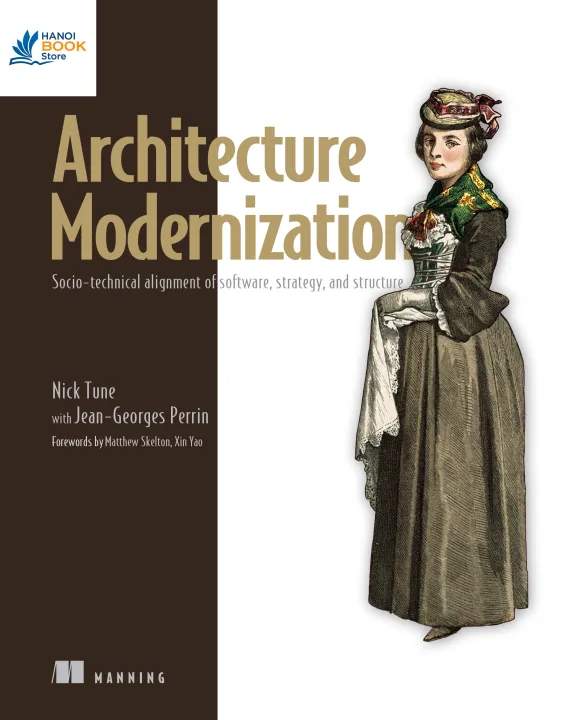
Sách Architecture Modernization Socio-technical alignment of software, strategy, and structure (Sách keo gáy, bìa mềm)
Proven techniques and principles for modernizing
legacy systems into new architectures that deliver serious competitive
advantage.
For a business to thrive, it needs a modern
software architecture that is aligned with its corporate architecture.
This book presents concrete practices that sync software, product,
strategy, team dynamics, and work practices. You’ll evolve your
technical and social architecture together, reducing needless
dependencies and achieving faster flow of innovation across your
organization.
In Architecture Modernization: Socio-technical alignment of software, strategy, and structure you’ll learn how to:
• Identify strategic ambitions and challenges using listening and mapping tours
• Visualize your business landscape and crucial capabilities with Wardley Mapping
• Create a product taxonomy as a framework for your architecture
• Run big picture EventStorming workshops to map business domains
• Apply Team Topologies patterns to identify and refine value streams
• Design loosely coupled, domain-aligned software architectures
• Build internal developer platforms for rapid, reliable evolution
• Implement data mesh principles and tools to revolutionize data engineering
• Deliver compelling modernization roadmaps focused on continuous value
About the book
Architecture Modernization: Socio-technical alignment of software, strategy, and structure
presents a clear path for upgrading your entire organization when you
re-imagine your software. In it, you’ll learn to combine practices like
Domain-Driven Design, Event Storming, and Wardley Mapping to discover
user needs, design optimal architecture, and avoid falling back into old
habits. Provocative examples from Danske, Salesforce, the UK
Government, and others show the real-world result of each approach,
identifying techniques you can apply effectively in your own business.
About the reader
For CTOs, tech leads, and principal engineers who decide on architecture and organization design.
Categories:Computers - Computer Business & Culture
Year:2024
Edition:1
Language:english
Pages:490