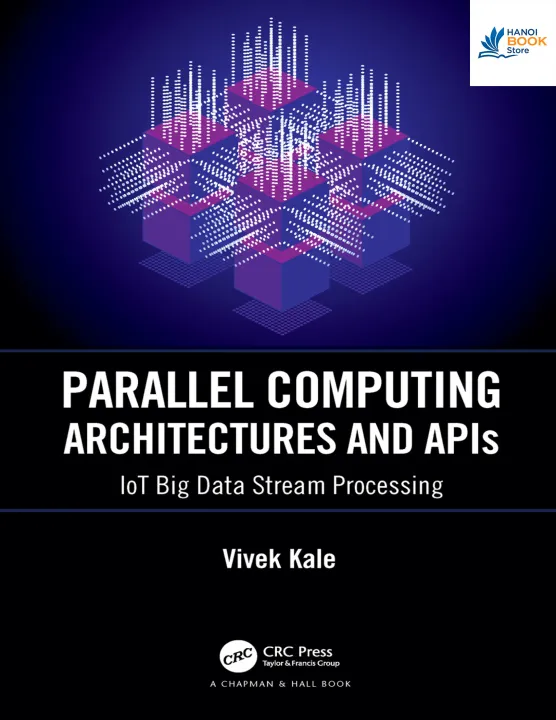
Sách keo gáy, Bìa mềm
Thể loại:omputers - Programming
Năm:2020
Nhà xuát bản:CRC Press
Ngôn ngữ:english
Trang:404
Parallel Computing Architectures and APIs: IoT Big Data Stream
Processing commences from the point high-performance uniprocessors were
becoming increasingly complex, expensive, and power-hungry. A basic
trade-off exists between the use of one or a small number of such
complex processors, at one extreme, and a moderate to very large number
of simpler processors, at the other. When combined with a
high-bandwidth, interprocessor communication facility leads to
significant simplification of the design process. However, two major
roadblocks prevent the widespread adoption of such moderately to
massively parallel architectures: the interprocessor communication
bottleneck, and the difficulty and high cost of algorithm/software
development.
One of the most important reasons for studying parallel
computing architectures is to learn how to extract the best performance
from parallel systems. Specifically, you must understand its
architectures so that you will be able to exploit those architectures
during programming via the standardized APIs.
This book would be
useful for analysts, designers and developers of high-throughput
computing systems essential for big data stream processing emanating
from IoT-driven cyber-physical systems (CPS).
This pragmatic book:
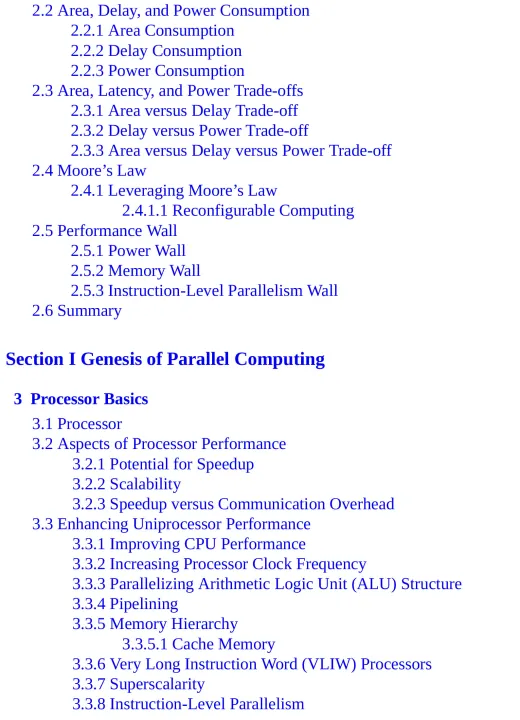
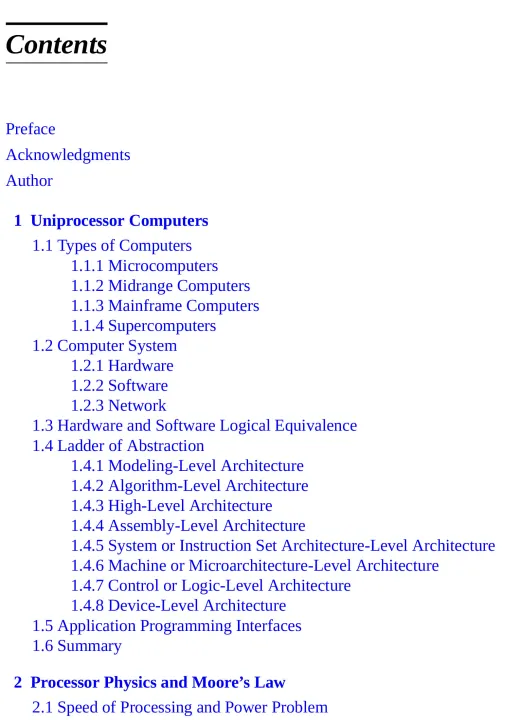
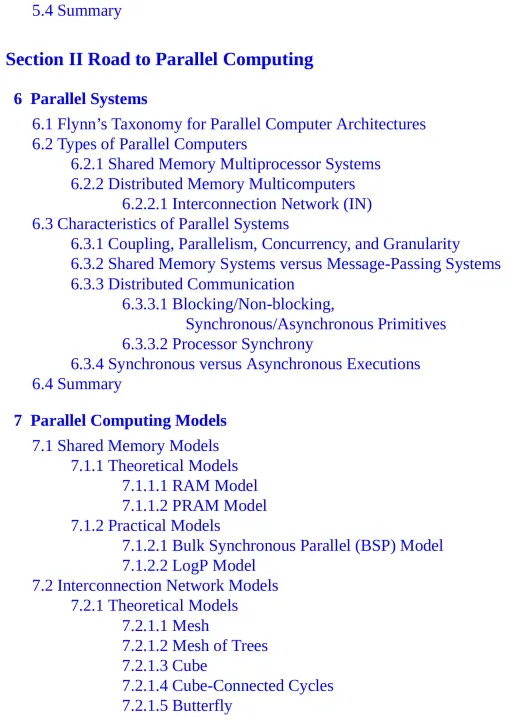
Devolves uniprocessors in terms of aladder of abstractionsto ascertain (say) performance characteristics at a particular level of abstraction
Explains limitations of uniprocessor high performance because of Moore's Law
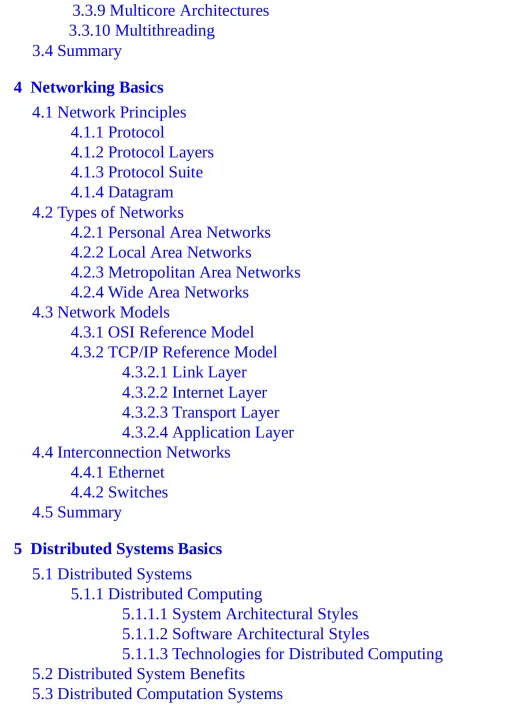
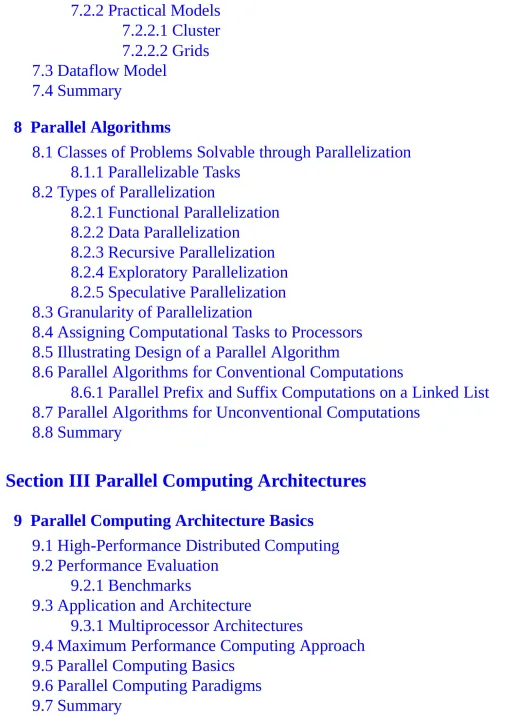
Introduces basics of processors, networks and distributed systems
Explains characteristics of parallel systems, parallel computing models and parallel algorithms
Explains
the three primary categorical representatives of parallel computing
architectures, namely, shared memory, message passing and stream
processing
Introduces the three primary categorical representatives of parallel programming APIs, namely, OpenMP, MPI and CUDA
Provides
an overview of Internet of Things (IoT), wireless sensor networks
(WSN), sensor data processing, Big Data and stream processing
Provides introduction to 5G communications, Edge and Fog computing
Parallel
Computing Architectures and APIs: IoT Big Data Stream Processing
discusses stream processing that enables the gathering, processing and
analysis of high-volume, heterogeneous, continuous Internet of Things
(IoT) big data streams, to extract insights and actionable results in
real time.Application domains requiring data stream management include
military, homeland security, sensor networks, financial applications,
network management, web site performance tracking, real-time credit card
fraud detection, etc.