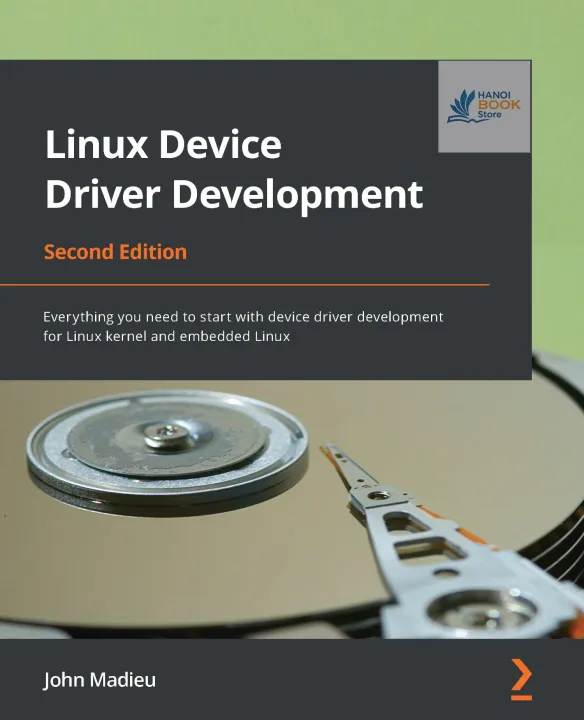
Sách keo gáy bìa mềm
Categories:Computers - Operating Systems
Year:2022
Publisher:Packt Publishing
Language:english
Pages:708
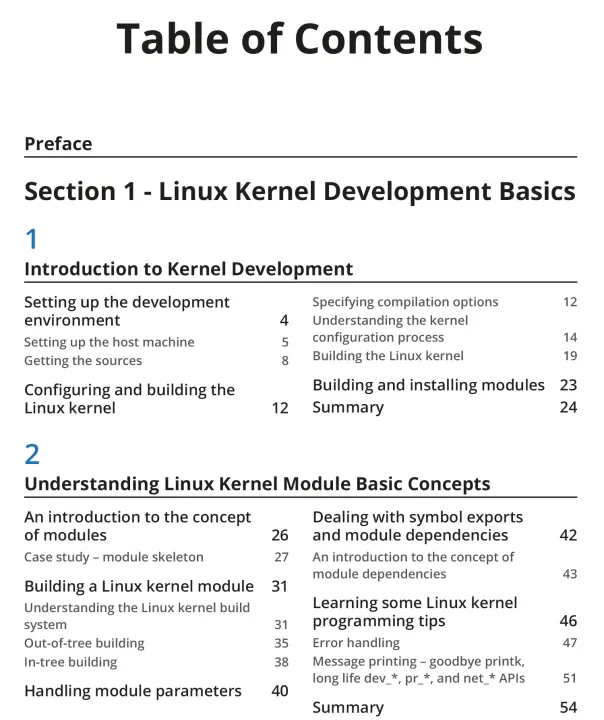
Get up to speed with the most important concepts in driver development
and focus on common embedded system requirements such as memory
management, interrupt management, and locking mechanisms Key Features:
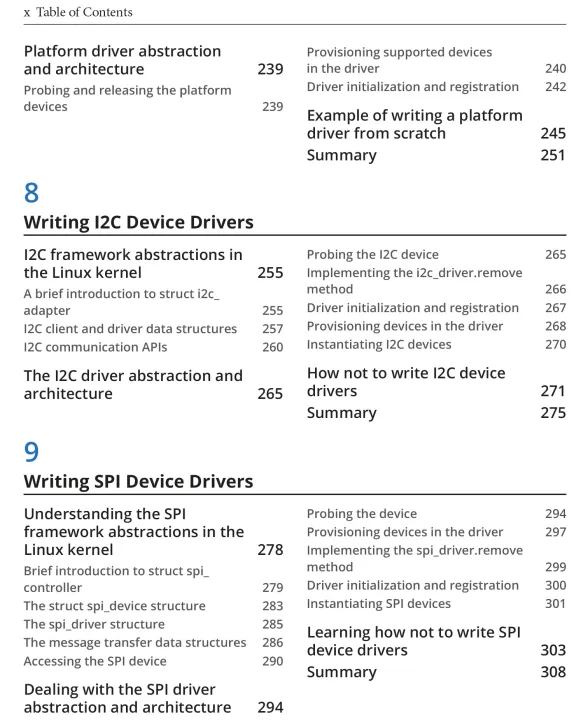
Write feature-rich and customized Linux device drivers for any
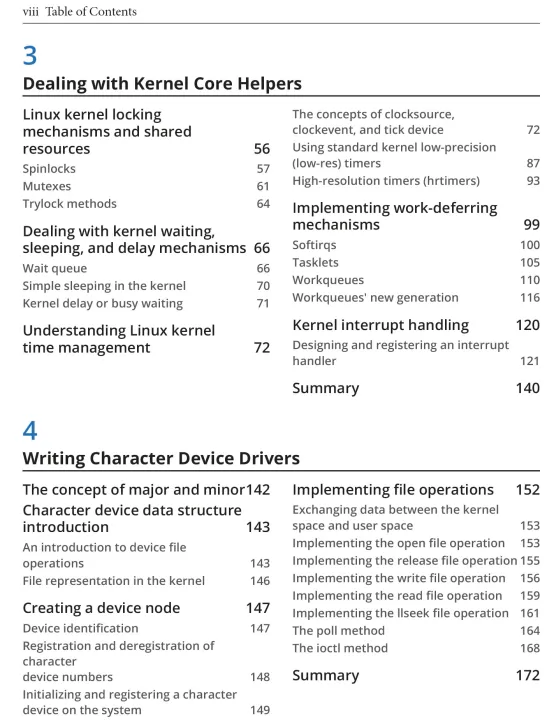
character, SPI, and I2C device Develop a deep understanding of locking
primitives, IRQ management, memory management, DMA, and so on Gain
practical experience in the embedded side of Linux using GPIO, IIO, and
input subsystems Book Description: Linux is by far the most-used kernel
on embedded systems. Thanks to its subsystems, the Linux kernel supports
almost all of the application fields in the industrial world. This
updated second edition of Linux Device Driver Development is a
comprehensive introduction to the Linux kernel world and the different
subsystems that it is made of, and will be useful for embedded
developers from any discipline. You'll learn how to configure, tailor,
and build the Linux kernel. Filled with real-world examples, the book
covers each of the most-used subsystems in the embedded domains such as
GPIO, direct memory access, interrupt management, and I2C/SPI device
drivers. This book will show you how Linux abstracts each device from a
hardware point of view and how a device is bound to its driver(s).
You'll also see how interrupts are propagated in the system as the book
covers the interrupt processing mechanisms in-depth and describes every
kernel structure and API involved. This new edition also addresses how
not to write device drivers using user space libraries for GPIO clients,
I2C, and SPI drivers. By the end of this Linux book, you'll be able to
write device drivers for most of the embedded devices out there. What
You Will Learn: Download, configure, build, and tailor the Linux kernel
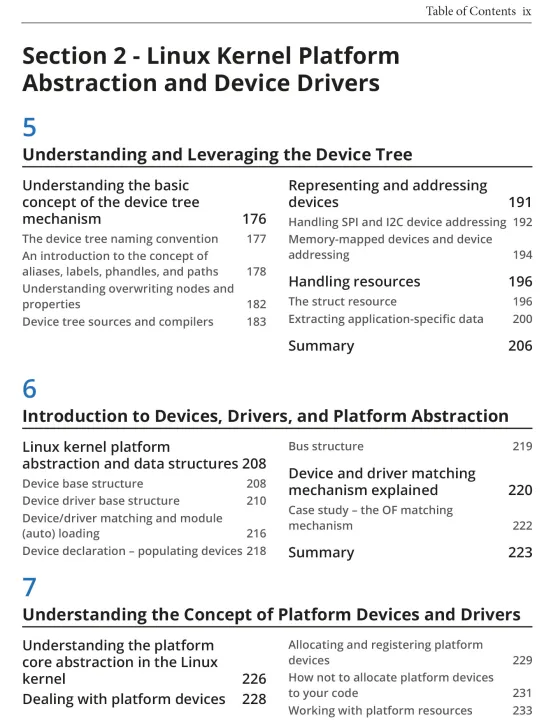
Describe the hardware using a device tree Write feature-rich platform
drivers and leverage I2C and SPI buses Get the most out of the new
concurrency managed workqueue infrastructure Understand the Linux kernel
timekeeping mechanism and use time-related APIs Use the regmap
framework to factor the code and make it generic Offload CPU for memory
copies using DMA Interact with the real world using GPIO, IIO, and input
subsystems Who this book is for: This Linux OS book is for embedded
system and embedded Linux enthusiasts/developers who want to get started
with Linux kernel development and leverage its subsystems. Electronic
hackers and hobbyists interested in Linux kernel development as well as
anyone looking to interact with the platform using GPIO, IIO, and input
subsystems will also find this book useful.