Sách keo gáy, bìa mềm
Thể loại:Computers
Năm:2021
In lần thứ:First edition
Ngôn ngữ:english
Trang:165
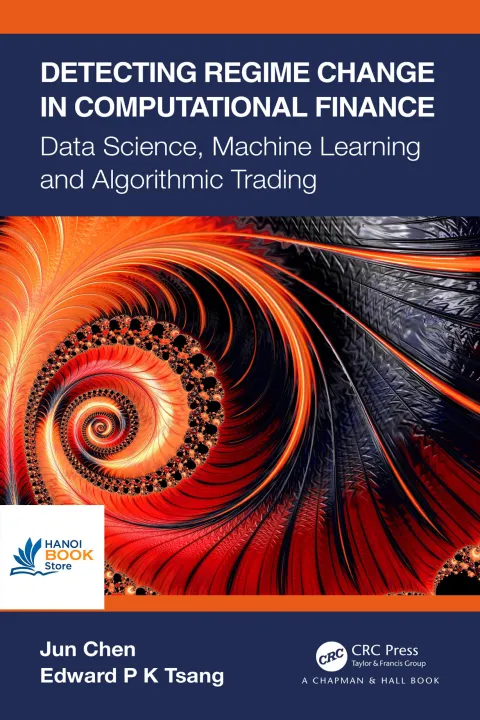
"Based on interdisciplinary research into "Directional Change", a new
data-driven approach to financial data analysis, Detecting Regime Change
in Computational Finance: Data Science, Machine Learning and,
Algorithmic Trading applies machine learning to financial market
monitoring and algorithmic trading. Directional Change is a new way of
summarizing price changes in the market. Instead of sampling prices at
fixed intervals (such as daily closing in time series), it samples
prices when the market changes direction ("zigzag"). By sampling data in
a different way, the book lays out concepts which enable the extraction
of information that other market participants may not be able to see.
The book includes a Foreword by Richard Olsen and explores the following
topics: Data science: as an alternative to time series, price movements
in a market can be summarised as directional changes Machine learning
for regime change detection: historical regime changes in a market can
be discovered by a Hidden Markov Model Regime characterisation: normal
and abnormal regimes in historical data can be characterised using
indicators defined under Directional Change Market Monitoring: by using
historical characteristics of normal and abnormal regimes, one can
monitor the market to detect whether the market regime has changed
Algorithmic trading: regime tracking information can help us to design
trading algorithms It will be of great interest to researchers in
computational finance, machine learning, and data science"--;Background
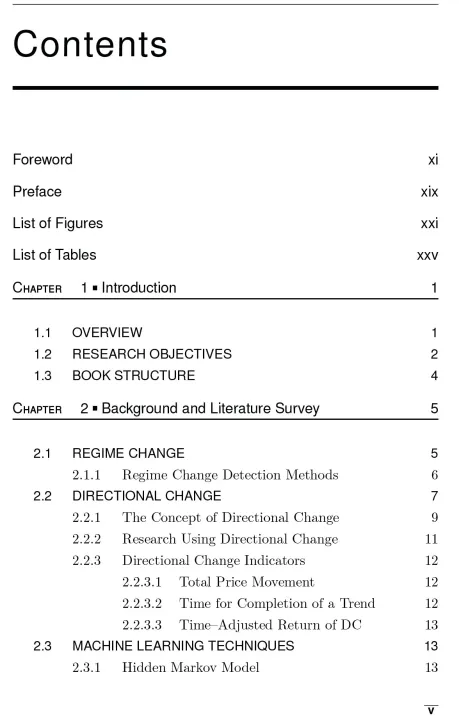
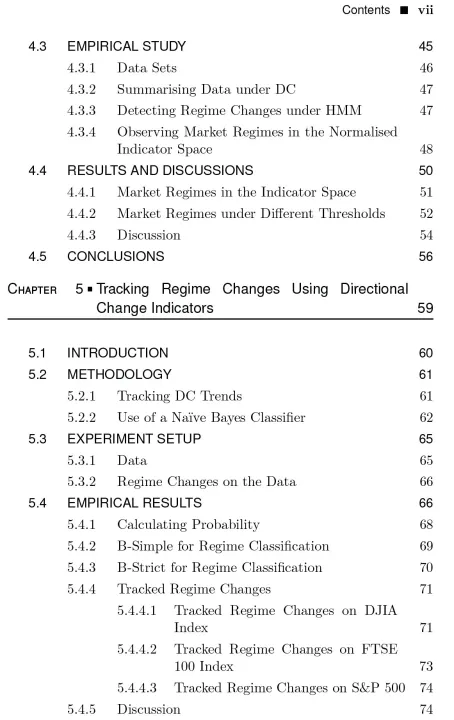
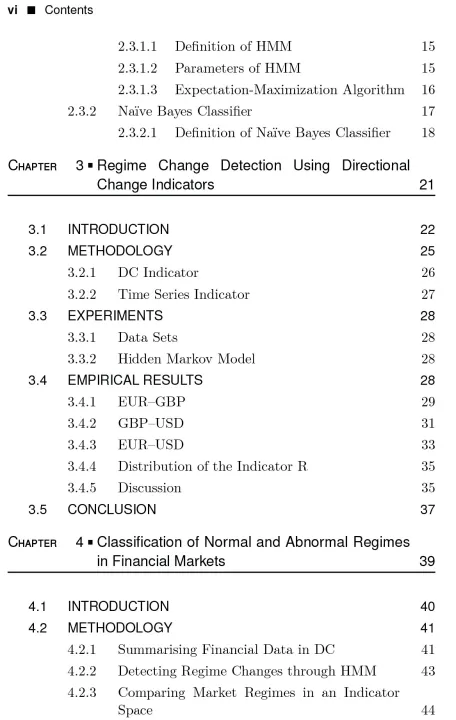
and literature survey -- Regime change detection using directional
change indicators -- Classification of normal and abnormal regimes in
financial markets -- Tracking regime changes using directional change
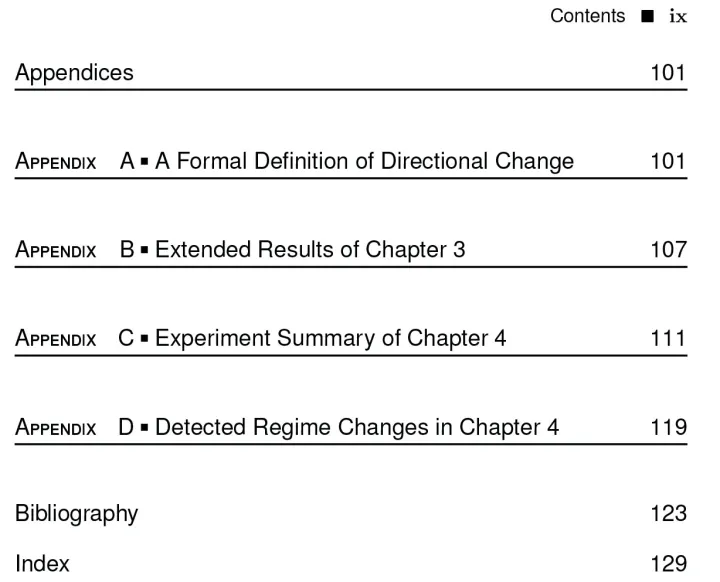
indicators -- Algorithmic trading based on regime change tracking.