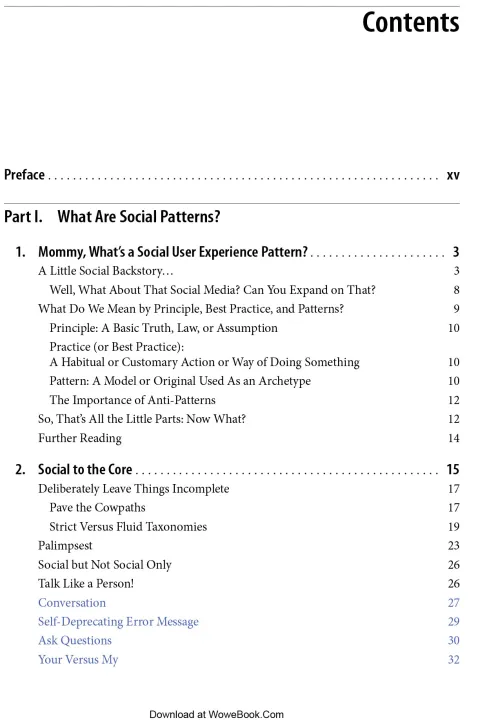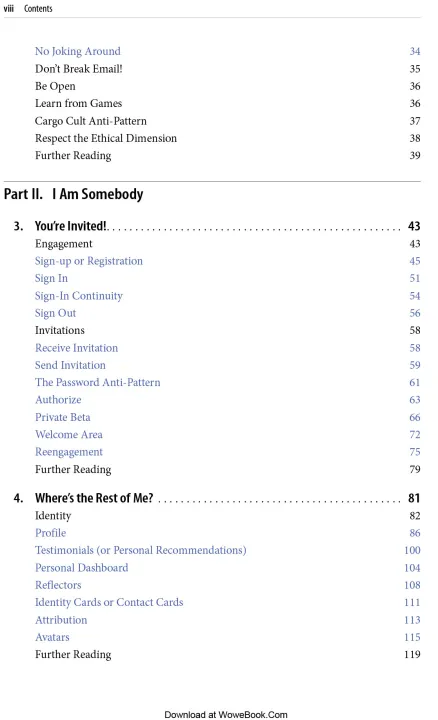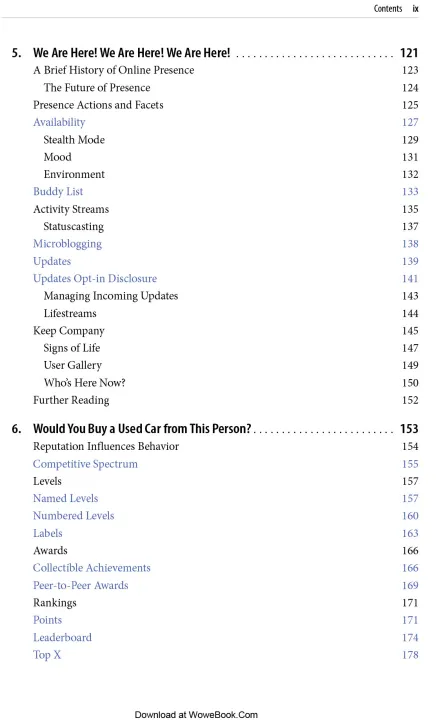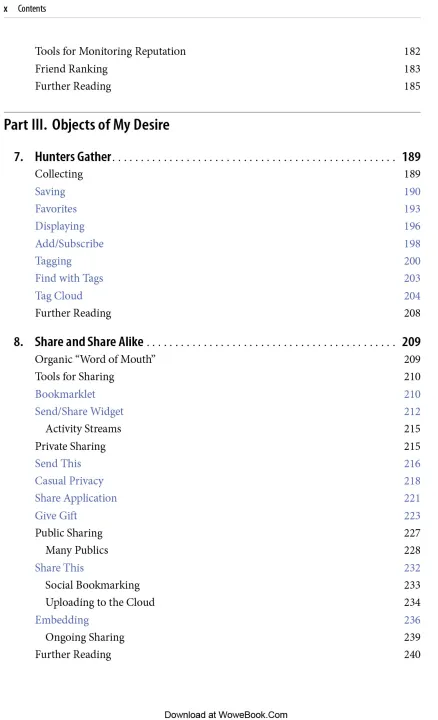
Sách keo gáy, bìa mềm
Thể loại:Computers - Web Development
Năm2009
In lần thứ:1
Ngôn ngữ:english
Trang:518
First, a disclaimer. I am a contributor to this book, as well as a
friend to the authors. Believe me, however, when I say that Designing
Social Interfaces is a critical reference to keep in your toolkit if you
design, product manage or even just participate in social communities
online. True, these are design patterns like you may be familiar with
from Jennifer Tidwell's (also excellent) Designing Interfaces: Patterns
for Effective Interaction Design but DSI factors in a critical (and
complex) fact: software designed to be shared amongst many, presents
vastly different challenges than that designed to be used alone. In a
one-to-one interaction (person to machine), the challenges are, at this
point in the computing revolution, somewhat known: challenges of clarity
(what can I do here?); usability (how do I proceed? how do I recover
from a misstep?); security (is my data safe?) Social interfaces add
whole new dimensions to the task of creating elegant interfaces. Most
importantly, the messy dimension of OTHER PEOPLE. Now, the discerning
interface designer must consider issues like: individual motivations,
egos, cliques and vendettas. This brave new world draws upon disciplines
as diverse as sociology, psychology and behavioral economics (oh, and,
btw - you STILL will have to work a layer in Photoshop from time to
time.) I have been designing community software professionally for more
than 10 years, and the challenges it presents are still daunting to me.
Designing Social Interfaces rises admirably to the task of giving people
like me a helping hand. First of all, it is a gorgeous book: if you
think you're familiar with the O'Reilly 'house' editorial designs
(functional, attractive, but.. just a little bit staid), then you should
take a look inside DSI and prepare to be pleasantly surprised. There
are abundant, full-color examples drawn from HUNDREDS of completely
contemporary interface examples. (I shudder when I think of how many
websites and applications the authors must have created accounts on to
gather the source material for this book.) The illustrations are
invaluable, giving real, practical and tangible evidence of the larger
patterns and trends that DSI identifies. It's one thing to say "Talk
Like a Person!" (pp. 26) -- it's a whole other thing to see example
after example of succesful social software sites that accomplish this
with grace. I'll point out, as well, that the authors succeed in
following their own advice: the entire book is written in a friendly,
straightforward manner. This is professional advice, given by
professionals, and never feels 'dry' or overly-academic. I feel that one
of the greatest services the book provides is in identifying and,
perhaps more importantly, NAMING all of these patterns that we can see
in evidence across contemporary sites. In my day-to-day work activities,
I have taken to referring to many of these patterns by name ("Wait, are
we just propping up a Potemkin Village here?") DSI has started to
permeate my working mind, and inculcated itself into my patterns of
discourse and persuasion. That, IMO, is how you can tell a pattern
library is well-done -- when it just feels so 'right' that it becomes
easier to think within it than without.