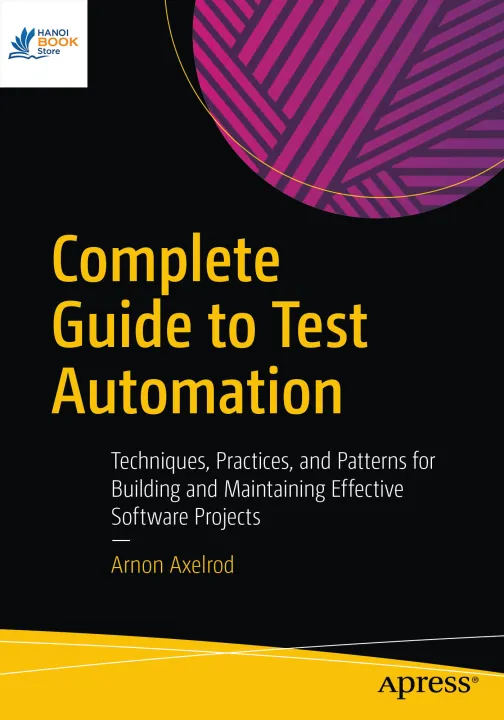
Sách keo gáy, Bìa mềm
Thể loại:Computers - Programming
Năm:2018
In lần thứ:1
Ngôn ngữ:english
Trang:560 / 542
Rely on this robust and thorough guide to build and maintain successful
test automation. As the software industry shifts from traditional
waterfall paradigms into more agile ones, test automation becomes a
highly important tool that allows your development teams to deliver
software at an ever-increasing pace without compromising quality.
Even
though it may seem trivial to automate the repetitive tester’s work,
using test automation efficiently and properly is not trivial. Many test
automation endeavors end up in the “graveyard” of software projects.
There are many things that affect the value of test automation, and also
its costs. This book aims to cover all of these aspects in great detail
so you can make decisions to create the best test automation solution
that will not only help your test automation project to succeed, but
also allow the entire software project to thrive.
One of the most
important details that affects the success of the test automation is how
easy it is to maintain the automated tests. Complete Guide to Test
Automation provides a detailed hands-on guide for writing highly
maintainable test code.
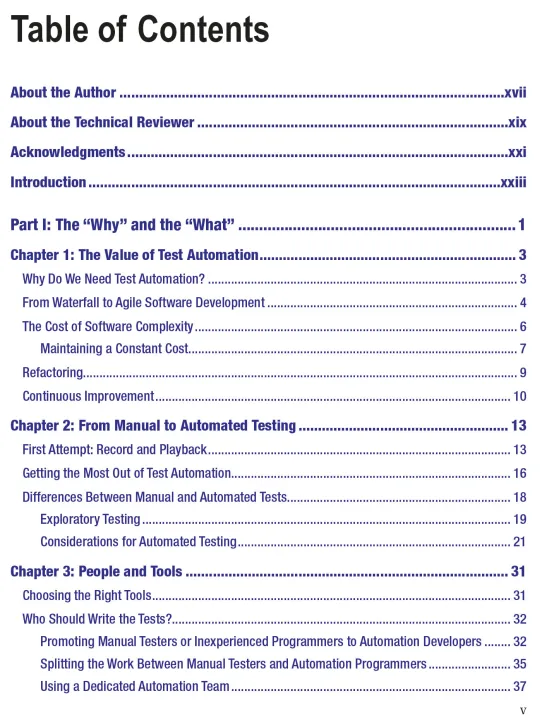
What You’ll Learn
• Know the real value to be expected from test automation
• Discover the key traits that will make your test automation project succeed
• Be aware of the different considerations to take into account when planning automated tests vs. manual tests
• Determine who should implement the tests and the implications of this decision
• Architect the test project and fit it to the architecture of the tested application
• Design and implement highly reliable automated tests
• Begin gaining value from test automation earlier
• Integrate test automation into the business processes of the development team
• Leverage test automation to improve your organization's performance and quality, even without formal authority
•
Understand how different types of automated tests will fit into your
testing strategy, including unit testing, load and performance testing,
visual testing, and more
Who This Book Is For
Those involved with
software development such as test automation leads, QA managers, test
automation developers, and development managers. Some parts of the book
assume hands-on experience in writing code in an object-oriented
language (mainly C# or Java), although most of the content is also
relevant for nonprogrammers.